
As a specialized high-temperature hose manufacturer, MST-Flexduct develops and manufactures flexible line systems for temperature ranges from -85 °C to +400 °C. Our high-temperature hoses are used wherever conventional hose systems fail under continuous thermal load, cyclical temperature changes, operating pressure or aggressive process media: in mechanical engineering, in energy and power-plant technology, in the automotive sector, and in aviation.
Every solution is designed on the basis of the actual operating parameters. Material selection, layer structure and geometry emerge from the combined consideration of thermodynamics, pressure profile and media resistance. The result is a high-temperature hose that not only passes the initial test but delivers reproducible performance over the entire service life.
Requirements for high-temperature lines
High-temperature lines are among the most safety-critical components in industrial and technical systems. They transport hot air, exhaust gas, process air or other thermally loaded media and must simultaneously withstand mechanical and chemical influences. In most cases, a design based on a standard catalogue is not sufficient.
Decisive are parameters such as continuous temperature and peak temperature, pressure level at operating temperature, air velocity and flow resistance, thermal cyclic stress over the service life, as well as the combination of vibration load and tight installation space. MST-Flexduct develops high-temperature hoses on the basis of a combined consideration of these factors. The thermodynamic design, the material choice and the mechanical layer structure are developed jointly for each specific application.

Talk to our experts
Together we develop the right industrial hose for your application. We advise you on a technically sound and project-oriented basis.
Materials & layer structures
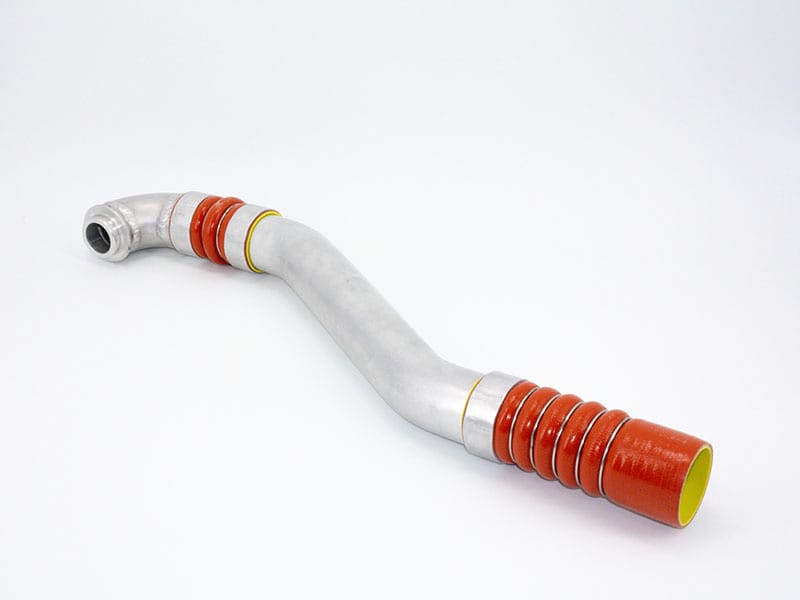
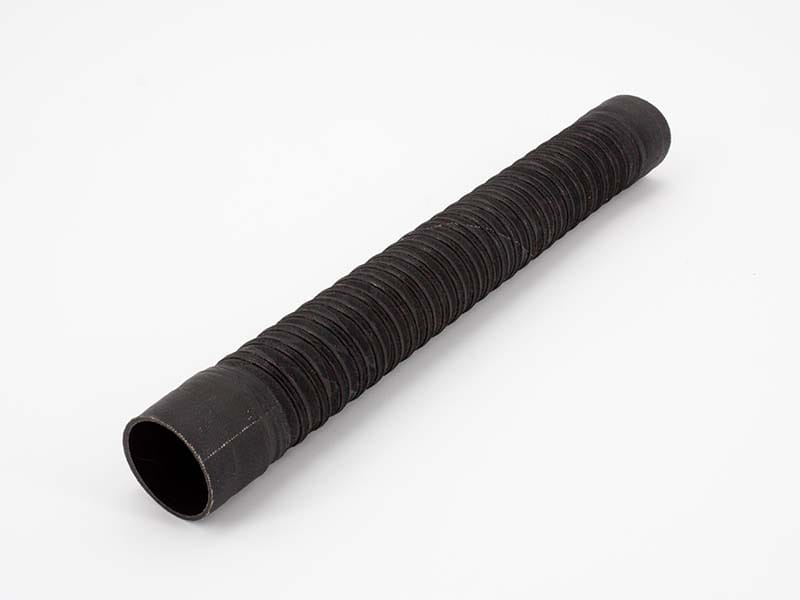
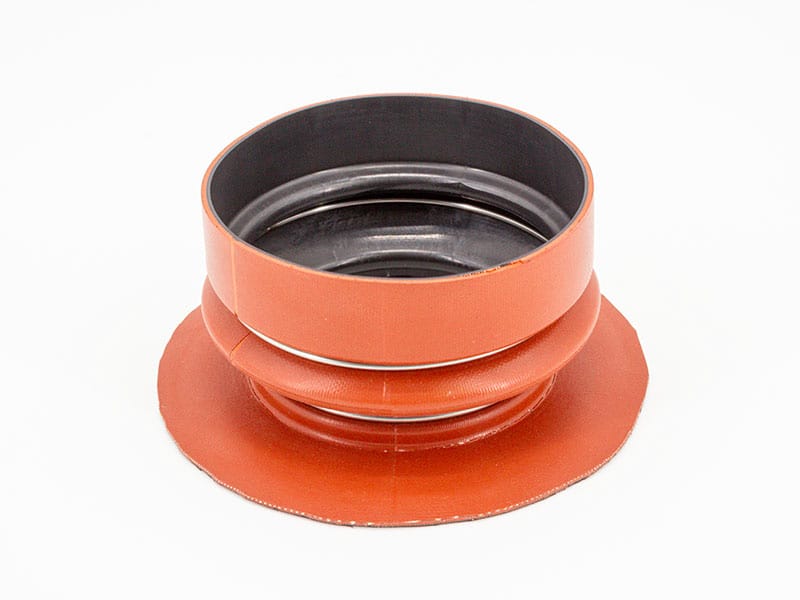
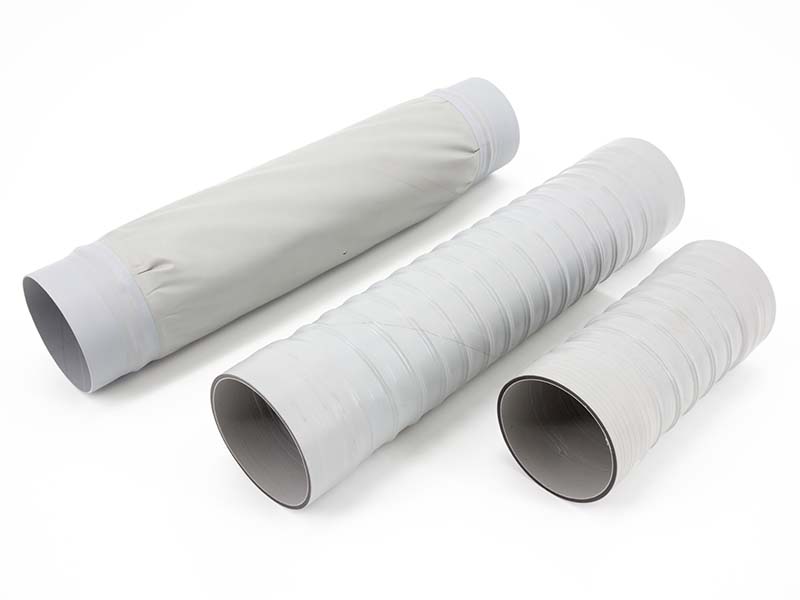
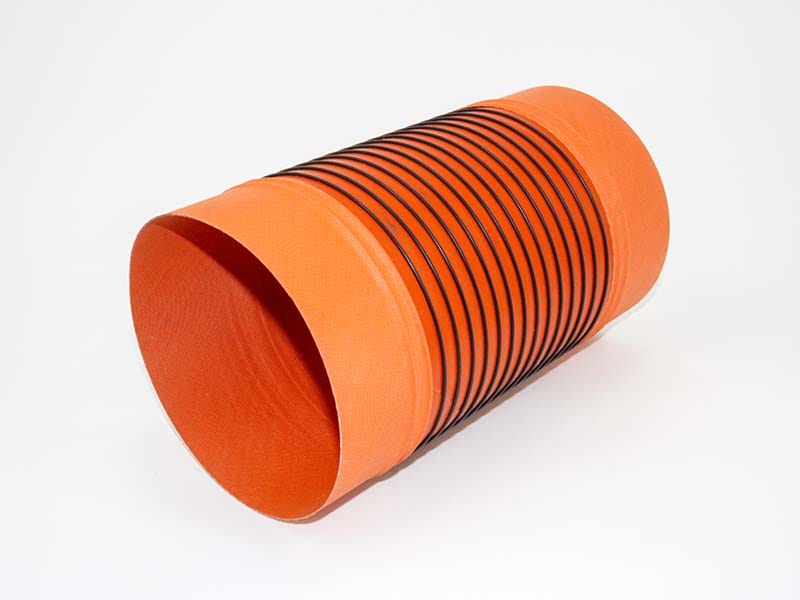
The performance of a high-temperature hose is largely determined by the material selection and the layer structure. MST-Flexduct uses exclusively high-quality elastomers and technical fabrics, which are specifically adapted in multi-layer structures to the respective combination of temperature, pressure and medium:
VMQ (silicone): High continuous temperature resistance up to +200 °C (short-term up to +250 °C), very good resistance to temperature changes, suitable for hot air, ECS systems and drying applications. Low pressure resistance compared to hybrid layers.
CR glass fabric: Temperature-resistant up to +400 °C in combination with suitable binder systems. Robust, abrasion-resistant and dimensionally stable for high-temperature exhaust-air routing and turbine environments. Low flexibility with tight bend radii.
FPM (fluoro rubber): Excellent resistance to non-polar hydrocarbons, acid condensate, ozone and process chemicals at temperatures up to +200 °C. Used in exhaust lines, chemical process plants and engine-adjacent hot-end components.
EPDM and other elastomers: Suitable for cooling and air-conditioning systems in the extended temperature range up to +150 °C. Good resistance to water, steam and dilute acids. Frequently used in combination with reinforcement layers for pressurized lines.
Material layers are combined into multi-layer composite systems that unite pressure resistance, temperature robustness and dimensional stability. Textile reinforcement layers increase the mechanical load capacity without impairing flexibility.
Temperature & pressure ranges
High-temperature hoses must safely absorb temperature and pressure, often in combination with vibrations, pulsations and dynamic load changes. MST-Flexduct takes these factors into account as early as the material selection and the dimensioning of the layer structure.
Where required, applications are supported by temperature/pressure diagrams, service-life forecasts or media-related load analyses. This creates a technically sound basis for reliable series approval.
Depending on the structure, MST-Flexduct’s solutions can:
- Permanently withstand temperatures from -85 °C to +400 °C
- Safely absorb pressure and vacuum load profiles, even at operating temperature
- Cope with cyclical thermal stresses over long service lives
- Use flow-optimized internal geometries to minimize pressure losses and heat losses
Typical applications for high-temperature hoses
MST-Flexduct high-temperature hoses are used in a wide variety of industrial systems. In all cases, the decisive factor is the combination of temperature resistance, pressure robustness and material resistance under continuous load, often over several thousand operating hours.
Hot-air lines between the blower and the process zone, connection hoses on blower units, process-air supply lines in drying and curing systems, as well as heat-transfer systems with defined flow cross-sections. Particular requirement: thermal resistance combined with media resistance to process chemicals.
Exhaust lines on combustion engines and turbines, thermal venting systems on pressure vessels, air ducts for turbo units and CHP exhaust-gas heat exchangers. Particular requirement: resistance to acid condensate and exhaust-gas constituents in accordance with TA Luft and VDI 2066.
Engine-adjacent air routing in the hot-end area, charge-air systems on turbochargers, thermal management in hybrid vehicles, as well as hot-end components in exhaust-gas after-treatment systems. Particular requirement: vibration resistance and pressure resistance combined with temperatures above 200 °C in continuous operation.
ECS systems (Environmental Control System) with hot-air routing from bleed-air branches, hot-air ducts in wing de-icing, as well as exhaust lines in APU systems (Auxiliary Power Unit). Particular requirement: fire-protection evidence to FAR 25.853 or CS-25 and vibration qualification to DO-160G.
Hot-air supply lines in continuous dryers, exhaust-air lines from process furnaces with temperatures up to +400 °C, and connecting lines between the heating unit and the process chamber. Particular requirement: permanent temperature resistance at the upper operating limit with minimal heat loss through the hose wall.
Testing & quality
Temperature-loaded line systems are safety-relevant. MST-Flexduct attaches the greatest importance to documented quality assurance and traceable inspection processes. The inspections are tailored to the specific load profiles of the respective application and, depending on the requirement, comprise:
Temperature-change tests with defined load collectives (continuous temperature, peak temperature, number of cycles)
Pressure and vacuum tests at operating temperature
Media-resistance tests for the relevant process media (exhaust-gas condensate, oil, process chemicals)
Ageing and material-fatigue tests after defined exposure times
Dimensional and tolerance inspections for OEM-compliant series production
Fire tests to FAR 25.853 (aviation) or EN 45545-2 (rail) on request
Functional and series approvals with batch-related documentation
Clearly defined inspection protocols ensure that every batch meets the required values and that every component in the series delivers reproducible performance.
Why MST-Flexduct as a high-temperature hose manufacturer?
High-temperature lines are components whose failure has immediate effects on operational safety and plant availability. Classic catalogue-based hose manufacturing is not sufficient. The decisive factor is the interplay of materials knowledge, thermodynamic design and series-capable manufacturing.
MST-Flexduct has a broad material base of VMQ, FPM, CR glass fabric, EPDM and multi-layer hybrid systems developed for exactly these requirements. Complemented by flow-optimized geometries, textile reinforcement layers and documented inspection processes, this creates a product that delivers constant performance under extreme conditions and can be manufactured economically in series.
Your advantages at a glance
- High-temperature hoses for continuous operation up to +400 °C made of VMQ, FPM, CR glass fabric and hybrid layers
- Resistance to temperature changes through material-specific design based on real load collectives
- Pressure and pulsation resistance dimensioned to the actual operating pressure at operating temperature
- Vibration-proof design with textile reinforcement layers for engine-adjacent and turbine-adjacent systems
- Chemical resistance to exhaust-gas condensate, oil vapours and process media through FPM materials
- Fire-protection evidence to FAR 25.853 and EN 45545-2 for aviation and rail applications
- Reproducible OEM series quality with batch-related inspection documentation
MST Flexduct
Request high-temperature hoses
Do you need high-temperature hoses for extreme temperatures, aggressive process media or demanding system requirements?
MST-Flexduct supports you from technical design through to series approval. Contact us with your specification requirements.
We advise you on a technically sound and solution-oriented basis. Series supplier for mechanical engineering, automotive, energy technology and aviation. Inspection reports and material evidence available on request.