
Climate hoses and drainage lines are safety-critical functional components in HVAC systems of aircraft and rail vehicles. They route conditioned air through tight cabin and fuselage areas, discharge condensate in a controlled manner, and must cope with temperatures from -55 °C to +135 °C, continuous structural vibrations, and strict fire-protection regulations to FAR 25.853 and EN 45545.
MST-Flexduct develops and produces exactly these system components as a series supplier for OEM and Tier-1 customers. Our climate hoses and drainage lines are designed to the requirements of Airbus (ABD 00031), Bombardier and the relevant railway standards, and are delivered with complete inspection documentation for approval and certification processes.
HVAC requirements in aviation and rail
HVAC systems (Heating, Ventilation, Air Conditioning) in commercial aircraft and rail vehicles operate under conditions that allow no tolerance for component failures. The line system must be flow-optimized, compensate for temperature and pressure fluctuations, and decouple vibrations without fatiguing over time.
For climate hoses in aviation applications, this means specifically:
- Flow-optimized internal cross-section to minimize pressure loss in ECS lines
- Temperature stability across the entire operating range from -55 °C (cruise conditions) to +135 °C (direct air routing from pack systems)
- Vibration qualification to RTCA DO-160G, Section 8
- Resistance to moisture, biofilm formation and cleaning agents according to cabin standards
- Low weight to support weight targets in aircraft construction
For rail vehicles, comparable requirements apply within the framework of EN 13133 and vehicle-specific specification definitions. MST-Flexduct uses multi-layer elastomer-textile systems that bring temperature behaviour, media resistance, pressure stability and weight into a balanced relationship and can be integrated into common line cross-sections without special dimensions.

Talk to our experts
Together we develop the right industrial hose for your application. We advise you on a technically sound and project-oriented basis.
Drainage in aviation systems
In commercial aircraft, condensation water regularly forms due to the temperature and humidity gradient between the fuselage interior and the outer skin. Particularly affected are areas beneath the cabin, in the cargo hold and along colder structural components. Uncontrolled draining water can cause corrosion on structural components, icing in critical areas, or electrical faults on control units and avionics components.
Drainage lines from MST-Flexduct for aviation
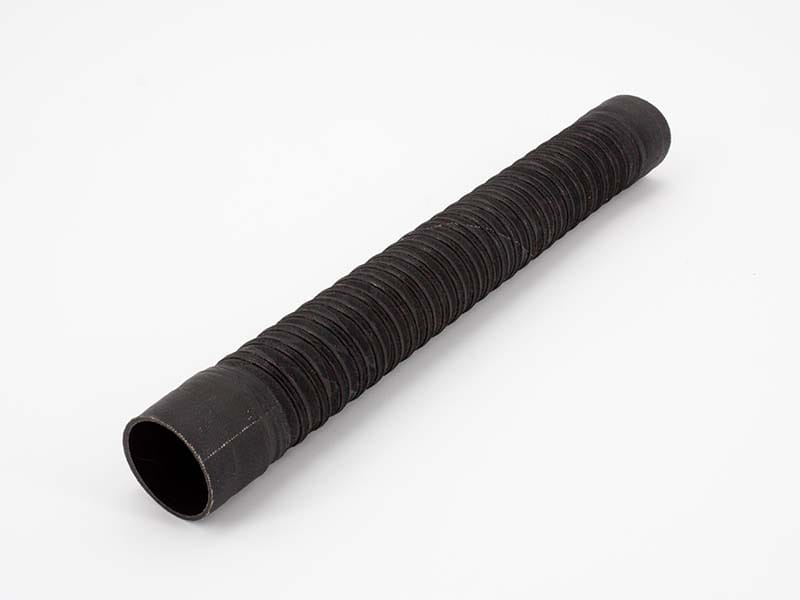
MST-Flexduct’s drainage lines have been developed specifically for the requirements of aviation. They combine low wall thickness with high flexibility and can also be routed in cramped fuselage areas.
In detail:
- Flexibility down to -55 °C without embrittlement or restriction of drainage performance
- Resistance to condensate, microbial growth and de-icing fluids to DO-160G and Airbus AIMS
- Sufficient inherent stiffness for a defined gradient without additional support measures
- Compatibility with dynamic loads from take-off, flight and landing (acceleration, vibration, pressure change)
- Low thermal conductivity to prevent ice formation on the outer wall of the line
The composite materials used, made of special elastomers and fabric reinforcements, offer low weight combined with high resistance and meet the relevant fire-protection standards for aviation. All drainage lines are delivered with documented inspection reports that serve as the basis for approval processes to FAR/CS 25.
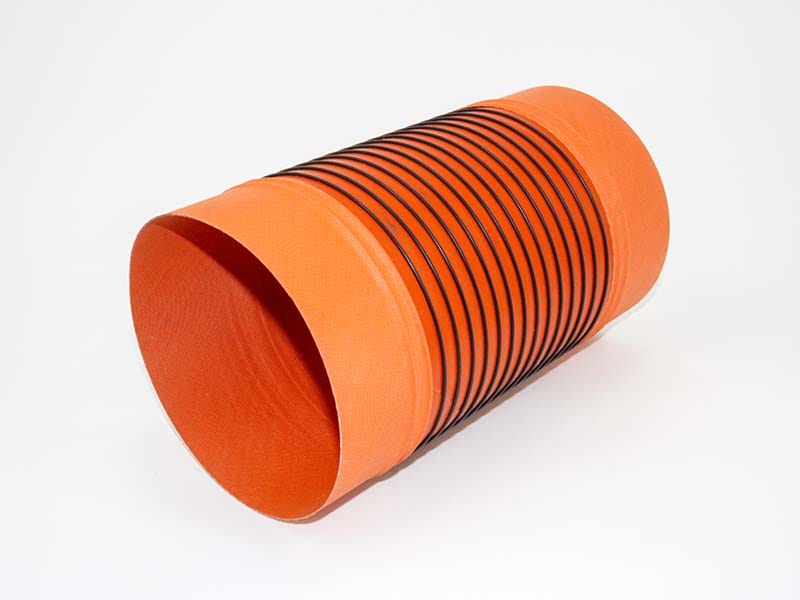
Materials & material structures
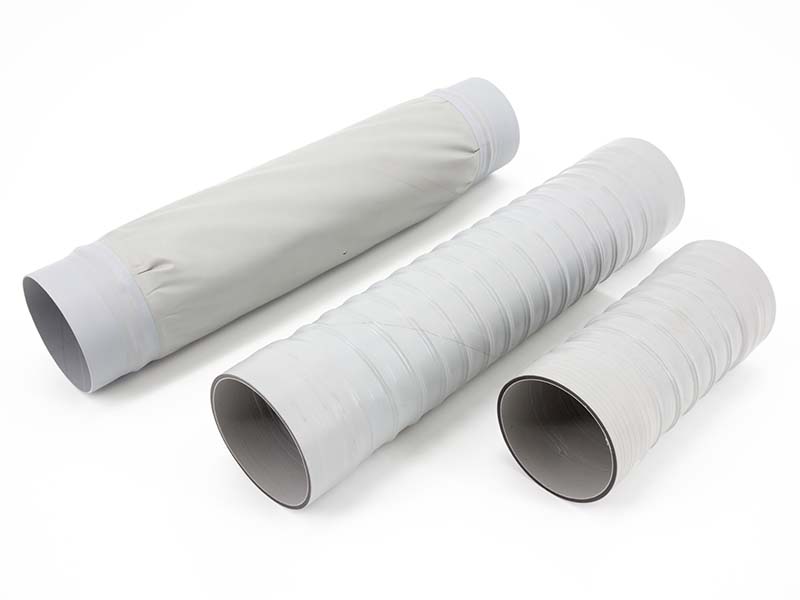
Climate hoses and drainage lines for aviation and rail place different demands on the material structure, as they are exposed to different operating media, pressure profiles and environmental conditions. MST-Flexduct develops the material structures product-specifically.
For climate hoses (HVAC, ECS):
Silicone elastomers or EPDM compounds for temperature resistance from -55 °C to +135 °C
Aramid or polyester reinforcement layers for pressure resistance and dimensional stability
Smooth inner layer for flow optimization and easy cleaning
Flame-retardant outer layers to FAR 25.853 or EN 45545
For drainage lines (condensate discharge):
Softer elastomer compounds for cold flexibility down to -55 °C
Biocide-resistant inner layer against microbial growth and odour formation
Low wall thickness with sufficient inherent stiffness for defined drainage gradients
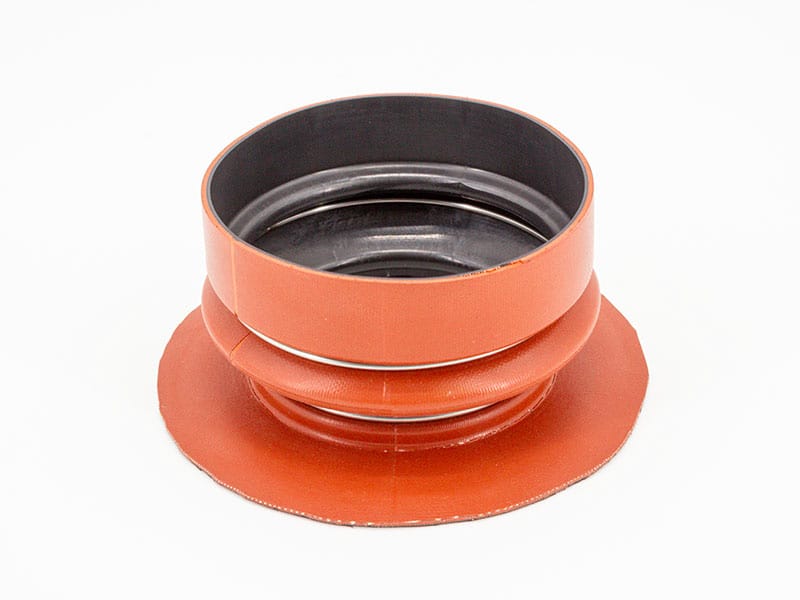
Drainage openings or fitting connections as specified by the customer
The selection of elastomers, fabric types and coatings is based on the operational load profiles and the normative requirements of the respective customer specification. MST-Flexduct supports this process from the design phase onward.
Fire protection & standards
In aviation and rail, fire protection is a mandatory part of the approval requirements. Climate hoses and drainage lines routed in cabins, fuselage areas or near propulsion systems must demonstrably exhibit defined fire behaviour.
MST-Flexduct develops hose solutions that comply with the following standards:
- FAR 25.853 (and the European equivalent CS-25 / JAR 25.853) for the flammability behaviour of cabin materials in transport and regional aircraft
- ABD 00031 of the Airbus Group for material requirements for flame-retardant cabin and structural components
- EN 45545-2 (successor to DIN 5510-2) for fire-protection requirements for materials and components in rail vehicles, including the hazard levels HL1, HL2 and HL3
- ASTM E662 / BSS 7239 for smoke density and toxicity measurement
The evidence of flammability behaviour, smoke generation, toxicity and thermal stability is documented with inspection reports from accredited testing institutes. Customers receive these documents as a direct part of the delivery documentation for approvals, sample inspections and audits.
Applications & use cases
MST-Flexduct climate hoses and drainage lines are used in safety-critical systems where material failure is not an option. Typical areas of use include:
Aviation:
- Air routing in passenger and crew cabins via ECS pack systems (Environmental Control System)
- Condensate discharge in the lower fuselage area and at cabin floor panels
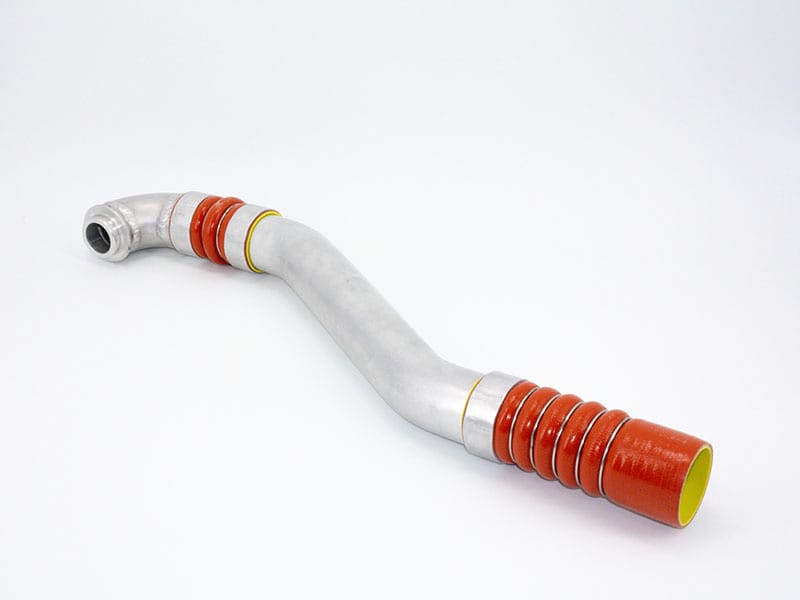
- Flexible transitions between rigid aluminium lines and moving cabin components
- Ventilation and cooling of avionics racks and control-unit areas
- Exhaust air routing in on-board galleys and sanitary facilities
Rail (rail vehicles):
- HVAC air distribution for passenger and driver areas in regional and long-distance trains
- Flexible connecting hoses between the air-conditioning unit and blow-in ducts
- Drainage lines in air-conditioning units on vehicle roofs
- Air routing in the area of drive technology and traction converters
Common to all applications is the requirement for permanently defined flexibility, chemical resistance and demonstrable standard conformity as a prerequisite for type approvals and operating licences.
Why MST-Flexduct for climate hoses and drainage lines?
HVAC and drainage systems in aircraft and rail vehicles are safety-relevant assemblies. Insufficient material quality, a lack of standard conformity or inadequate reproducibility in series production can lead to system failures or failed approval tests.
MST-Flexduct combines deep materials expertise with the experience of many years of series development for aviation and rail applications. In practice, this means:
- Design based on real operating parameters (temperatures, pressures, media, vibration profile) instead of standard catalogue products
- Standard-compliant development to FAR 25.853, ABD 00031, EN 45545-2 and DO-160G from the very first sample phase
- Reproducible OEM series quality with complete batch traceability
- Technical support from design through to series approval by experienced engineers
- Stable supply capability as a direct Tier-1 supplier and experienced OEM partner
Your advantages at a glance
- Climate hoses and drainage lines designed specifically for aviation and rail HVAC
- Demonstrable cold flexibility down to -55 °C for drainage without restriction of drainage performance
- Temperature resistance up to +135 °C for conditioned air routing in ECS systems
- Fire-protection evidence to FAR 25.853, ABD 00031 and EN 45545-2 with inspection reports from accredited institutes
- Vibration-proof design with vibration qualification to DO-160G
- Weight-optimized wall thicknesses for aviation applications from 1.5 mm
- Complete traceability and batch documentation for approval and audit processes
MST Flexduct
Request climate hoses or drainage lines now
Do you need climate hoses or drainage lines for aviation or rail?
MST-Flexduct supports you from technical design through to series approval.
Contact us for a non-binding consultation or send your specification requirements directly to our engineering team.
Series supplier for aviation and rail. Certified quality processes. Inspection reports for FAR 25.853, ABD 00031 and EN 45545-2 available.